Call us on (212) 901-5705
Live Spot-Price Gold Buyers31 W 47th Street, New York
gold
Licensed NYC buyer, Lic# 2134780-DCWP, 47th Street Diamond District.
By Sophia Bennett, InstaGold, September 30, 2026
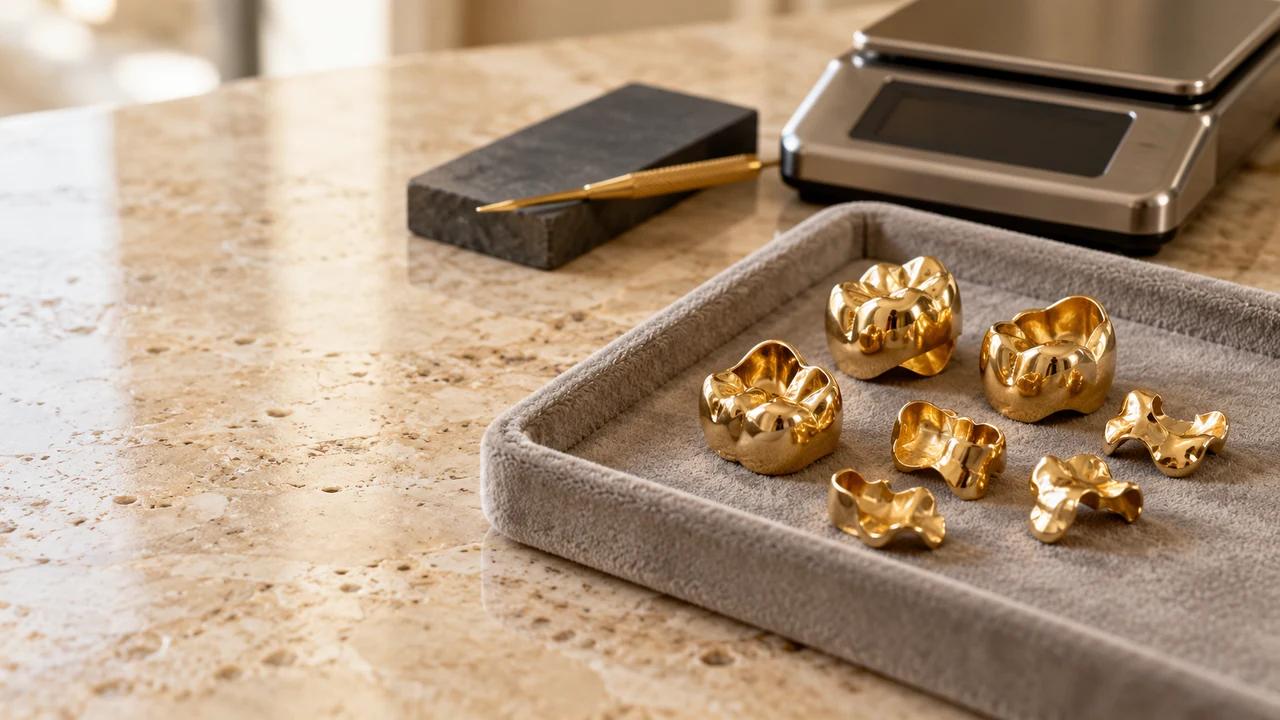
Quick answer: dental gold is worth real money, but it is almost never pure. Crowns, bridges and inlays are alloys, typically somewhere between 10 and 22 karat, with many older pieces around 16 karat. Its value is the gold content by weight at the current spot price, minus the buyer's margin. A single crown can be worth a meaningful sum, and a jar of old dental work more. The buyers who pay the most are licensed refineries that test the actual metal content rather than guessing, because dental alloys vary so much.
Most people who find old dental gold, after a procedure or while clearing out a relative's belongings, assume it is worthless or slightly unpleasant to deal with. It is neither. Dental gold has genuine value, specialist buyers pay for it every day, and the whole process is clean and quick. This guide explains what it is, what it is worth, how it is tested, and where to sell it in New York.
What is dental gold?
Dental gold is the gold alloy used in crowns, bridges, inlays, onlays and some older fillings and partial dentures. Gold has been used in dentistry for a long time because it is durable, does not corrode in the mouth, and is easy to shape. Pure gold, however, is too soft for chewing, so dentists use alloys: gold mixed with platinum, palladium, silver, copper and other metals for strength.
That mixing is why dental gold is confusing to value. Two crowns that look identical can have very different gold content, because different dentists and labs used different alloys in different decades.
How much gold is actually in a dental crown?
It varies, and this is the honest answer rather than a marketing one. Dental alloys are usually grouped like this:
Older dental work is more likely to be high noble, which is why a crown from decades ago can be worth more than a recent one. A typical high-noble crown weighs a few grams, and its gold content is what a buyer pays for. Some alloys also contain platinum or palladium, which have value of their own and which a good buyer will account for.
How is dental gold tested and priced?
Because dental alloys vary so much, you cannot price dental gold by looking at it or by assuming a karat. A serious buyer tests it. The usual methods are:
Once the content is known, the price follows the same formula as any gold: weight in grams, multiplied by the gold percentage, multiplied by the spot price per gram, minus the buyer's margin. Dental gold usually earns a slightly lower percentage of spot than clean jewelry, because it has to be separated from porcelain, cement and other metals before refining. That is a processing cost, not a trick, and a transparent buyer will explain it.
Do I need to clean dental gold before selling it?
No, and please do not try to remove porcelain or tooth material yourself. Bring it as it is. Buyers handle dental gold routinely and will separate the metal from anything attached. Cleaning it yourself risks losing small pieces of gold and achieves nothing the buyer will not do anyway. A bag or small container is all you need.
How much is a gold crown worth?
There is no single figure because it depends on three things: the weight of the crown, the gold content of the alloy, and the spot price on the day. To give a sense of the method, take an illustrative spot price of $2,500 per troy ounce, which is about $80 per gram of pure gold. A high-noble crown weighing 3 grams with 70 percent gold content contains about 2.1 grams of pure gold, worth roughly $168 at spot before the buyer's margin. A base-metal crown of the same weight might be worth almost nothing. This is why testing matters, and why a buyer who offers a flat "per crown" price without testing is usually underpaying on the good ones.
The example uses a made-up spot price to show the calculation. The live price changes daily.
Who buys dental gold near me in NYC?
Several kinds of buyer will take it, and they pay very differently:
InstaGold buys dental gold at its licensed Diamond District office at 31 W 47th Street, Suite 202, tests the content in front of you, and pays the same day. Anyone who wants to sell dental gold in NYC can bring it in with no appointment.
Can I sell dental gold with the tooth still attached?
Yes. Crowns often come out with part of the tooth or the cement still attached, and buyers see this constantly. The gold is weighed after separation, so the tooth material does not count toward the price and does not stop the sale. There is nothing awkward about it. Refineries handle it as a matter of routine.
What else is worth selling alongside dental gold?
People who find dental gold often find other overlooked precious metal at the same time:
Bring the lot. A refinery buyer sorts gold from platinum from silver from plated, and prices each correctly. Mixed jars of odds and ends regularly surprise people once everything is tested.
Step by step: selling dental gold in New York
Mistakes people make with dental gold
Is it acceptable to sell a relative's dental gold?
Yes. It is common for dental gold to turn up while settling an estate or clearing a home, and selling it is entirely normal. Dental gold that has been removed is simply precious metal scrap. Buyers see it constantly and treat it with the same professionalism as any other gold. If it helps, think of it the way you would think of an old ring: it is metal with value, and the respectful thing to do is not to throw that value away.
What is the difference between dental gold and dental scrap?
Buyers use both terms, and they mean roughly the same thing: any gold-containing dental work that has been removed. "Dental scrap" sometimes also includes the porcelain-fused-to-metal crowns, bridges with several units, gold inlays, and old partial dentures with gold clasps. All of it is bought for the precious metal it contains. The one thing that is not worth much is base-metal dental work with no gold, and testing is how you tell the difference.
How much dental gold is worth selling?
There is no minimum. One crown is worth bringing in, and if you have several pieces they are weighed and priced as a lot. Because dental work is small and dense, a handful of crowns can weigh more and contain more gold than people expect. The right approach is to bring every piece, including the ones you are unsure about, and let the testing sort out which have value.
What about partial dentures and bridges with gold?
Bring them too. Partial dentures sometimes have gold or precious-metal clasps and frameworks, and multi-unit bridges can contain a meaningful amount of alloy. The plastic and acrylic parts have no value, but the metal underneath is bought like any other dental gold. The buyer separates the metal from the rest, so you do not need to do anything to it beforehand.
Why do refineries pay more for dental gold than jewelers?
Because dental gold is awkward for anyone who does not refine. A jeweler who buys a crown cannot resell it as jewelry; they have to send it to a refinery, wait for the assay, and accept the refinery's price minus their own margin. So they price cautiously and pay you less to protect themselves. A refinery buyer skips all of that. It tests the content on the spot, knows exactly what it will recover, and can pay you a share of that directly. For dental gold specifically, that difference in the supply chain is often the largest single factor in what you are offered.
Frequently asked questions
Is dental gold worth anything?
Yes. Most crowns, bridges and inlays contain gold alloy worth real money. Older, high-noble pieces are worth the most.
How much gold is in a dental crown?
It depends on the alloy. High-noble crowns can be 70 percent gold or more; noble alloys have less; base-metal crowns have little or none. Testing confirms which you have.
Who buys dental gold near me?
Licensed refinery buyers in Manhattan's Diamond District pay the most, because they test the true content and refine in house. InstaGold at 31 W 47th Street is one.
Do I need to remove the tooth from a gold crown before selling?
No. Bring it as it is. The buyer separates the metal and weighs only the gold.
How is dental gold priced?
Weight in grams, times the gold percentage, times the spot price per gram, minus the buyer's margin. Reputable buyers show this calculation.
Can I sell dental gold with porcelain on it?
Yes. Porcelain-fused-to-metal crowns are common. The buyer removes the porcelain and pays for the metal underneath.
How fast do I get paid for dental gold?
The same day, at a licensed in-person buyer.
Turn old dental gold into cash
InstaGold is a licensed New York gold buyer and refinery at 31 W 47th Street, Suite 202, in the Diamond District. We test dental gold in front of you, price it on its real content at the live spot rate, and pay the same day. Walk in Monday to Friday, 9am to 5pm, or request a free online offer first. No appointment, no pressure, and nothing to clean before you come.

Sophia Bennett
Precious Metals & Luxury Watch Specialist
Sophia Bennett is a precious metals and luxury watch specialist at InstaGold, with experience evaluating gold jewelry, coins, bullion, Rolex watches, and other high-value pieces. Based in New York’s Diamond District, she helps sellers understand what influences an item’s value and guides them through a private, straightforward appraisal process.
Reviewed for accuracy by the InstaGold team.